A retaining wall only works if it is built to handle the soil and water behind it. James Z. Concrete & Construction builds poured concrete and block retaining walls across Bakersfield and the Central Valley, with the drainage and grading that keep them standing.
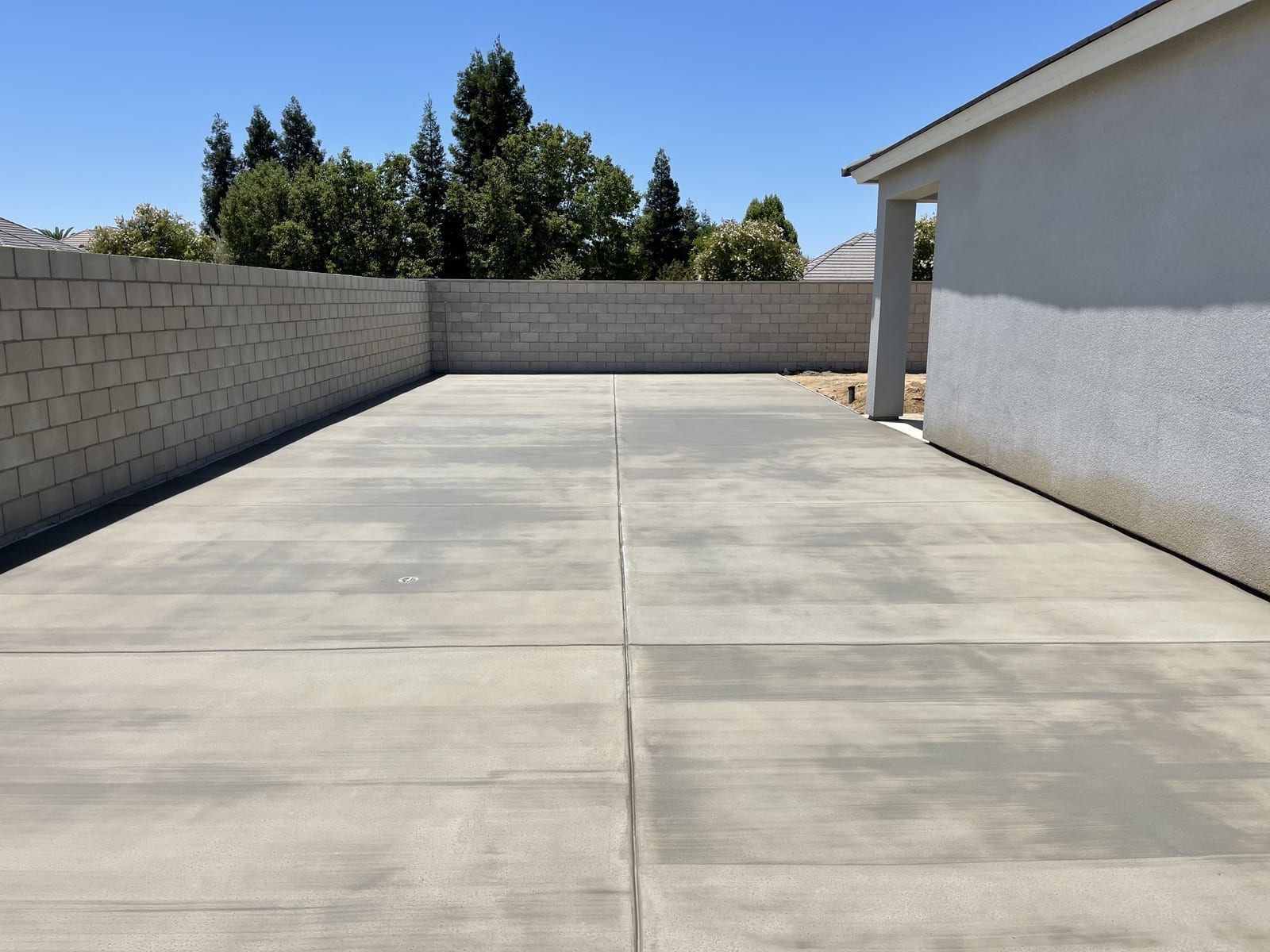
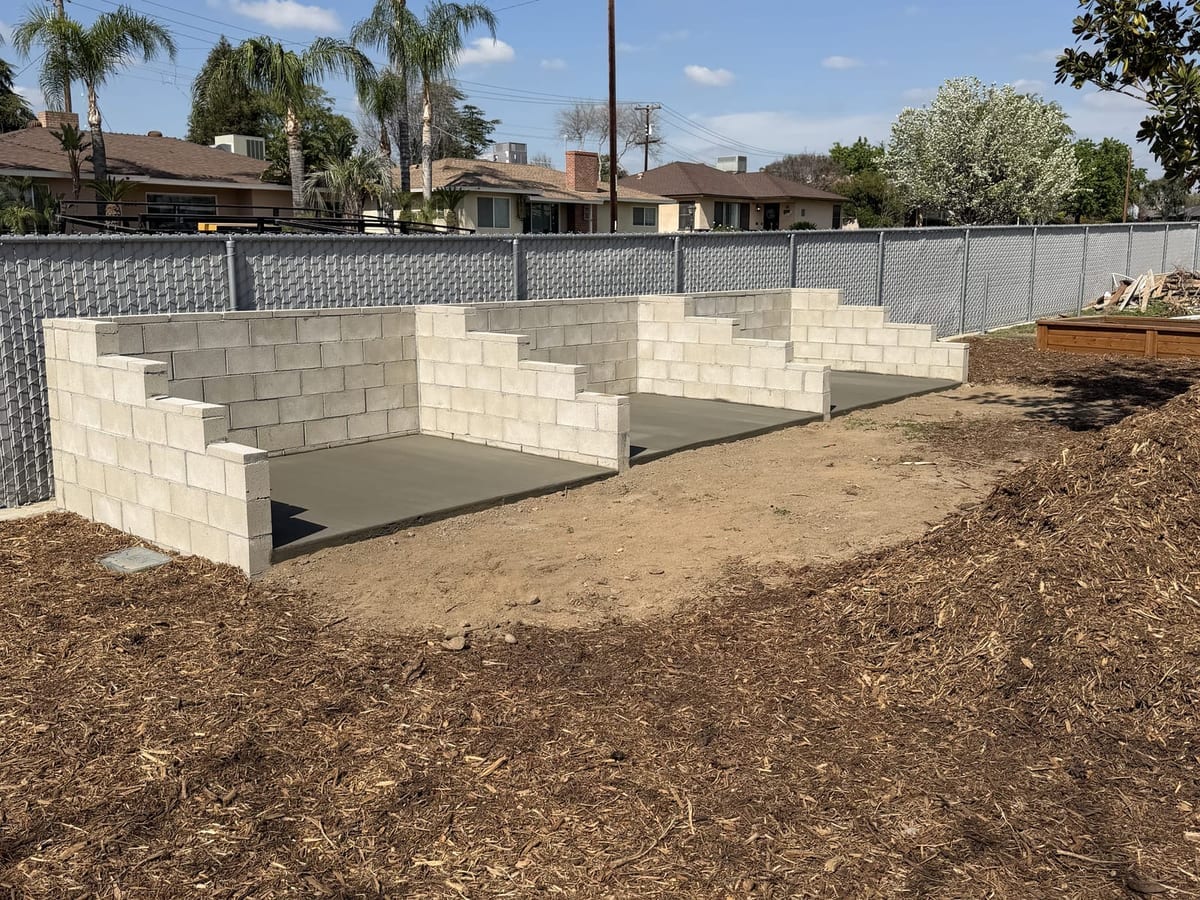
A retaining wall holds back soil that wants to move. Get the engineering wrong and the wall leans, cracks, or fails. We build both poured concrete walls and block (CMU) walls, and we pick the right one for your site, your slope, and your budget. Poured concrete gives you a solid, monolithic wall for taller heights and heavier loads. Block walls go up faster and work well for shorter garden and terrace walls.
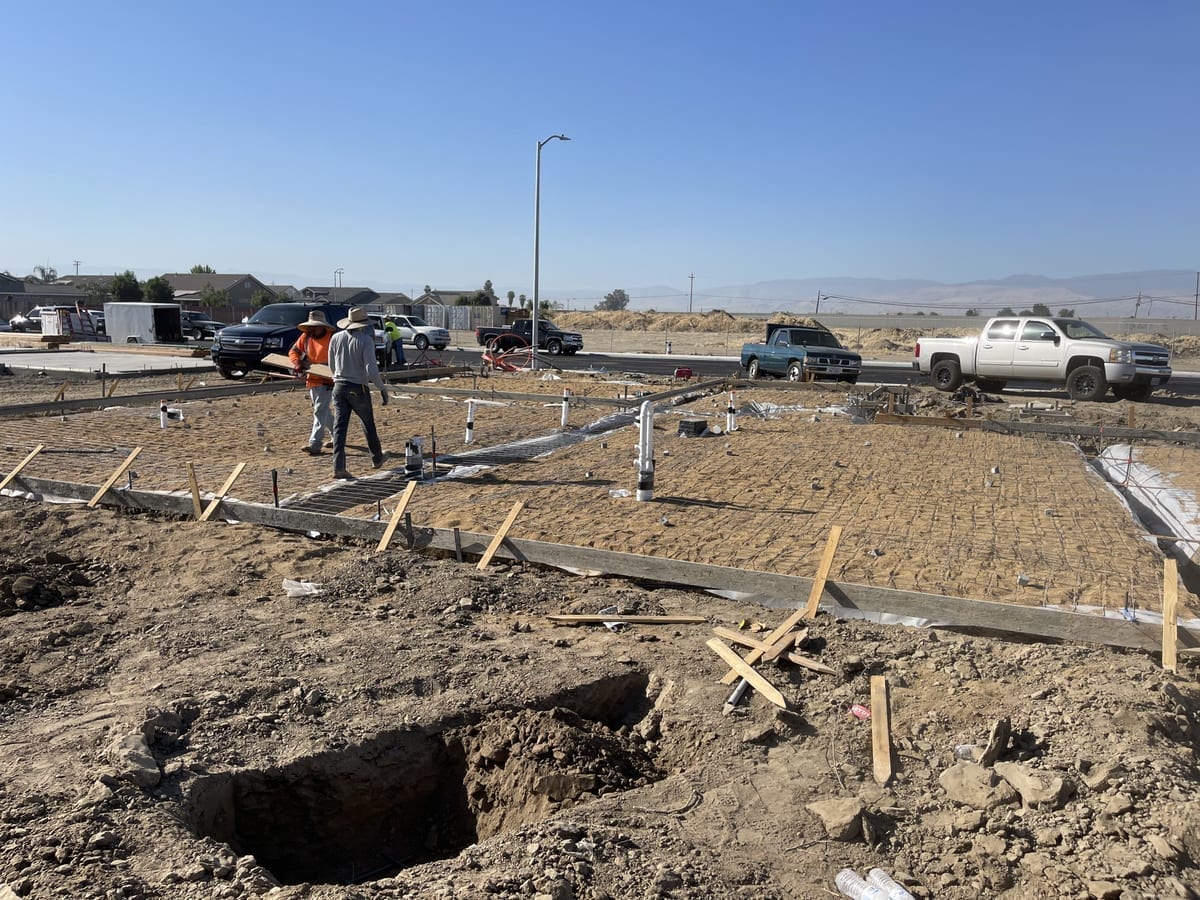
Every wall starts below grade. We dig and pour a proper footing sized for the height of the wall and the soil it sits on. Then we set vertical and horizontal rebar so the wall resists the pressure pushing against it. A wall without steel in the right places is a wall waiting to crack. We do not cut that corner.
Drainage is what separates a wall that lasts from one that bulges and fails. Water trapped behind a wall adds enormous pressure. We install a perforated drain pipe at the base, backfill with gravel, and add weep holes so water has somewhere to go instead of building up behind the concrete. This matters even more in the Central Valley, where expansive clay soils swell when wet and shrink when dry. That movement is brutal on a wall that was not built for it.
Grading ties the whole job together. Before and after the wall goes in, we shape the ground so water runs away from the structure and the wall, not toward it. Poor grading is one of the most common reasons retaining walls and the slabs near them fail early. We make sure the finished site sheds water the way it should.
We build retaining walls for a lot of reasons. Some hold back a hillside or a graded pad. Some create usable flat space in a sloped yard. Some step a property down in terraces for planting beds or a patio. Some sit at the edge of a driveway or pool deck to manage the change in elevation. Whatever the reason, the fundamentals are the same: a solid footing, the right reinforcement, real drainage, and clean grading.
Finish is up to you. A retaining wall does not have to look like a bare gray slab. We can leave a smooth troweled face, add a broom or exposed aggregate texture, or stamp and color the concrete to match a patio or pool deck. For block walls we can cap and finish the top so the wall reads as part of the landscape instead of an afterthought. With over 40 years in the trade, we have built walls of every height and style across Kern County and the Valley.
Height and soil conditions decide how a wall has to be built. Taller walls and walls holding back heavy loads may need an engineer's design and a permit, and we will tell you straight if yours does. We work to CSLB standards and local code on every job. We are licensed (CSLB #778284), bonded, and workers' comp insured, so the work is covered and done right.
 Poured Concrete Retaining WallsBlock & CMU Retaining WallsDrainage & Backfill SystemsGrading & Site Prep
A retaining wall is not the place to save money on the parts you cannot see. The footing, the steel, and the drainage are what hold the slope back for the next thirty or forty years. We build the whole wall right, top to bottom, so you are not paying to fix or replace it down the road.
Need a wall to hold back a slope, level out a yard, or finish off a patio or driveway? Call James Z. Concrete & Construction at (661) 501-8680. We will come out, look at your site and soil, and give you a free, no-obligation quote within 24 hours. Serving Shafter, Bakersfield, Wasco, Delano, and the rest of the Central Valley.
It depends on the height, the load, and your budget. Poured concrete makes a solid, monolithic wall that handles taller heights and heavier soil pressure well. Block (CMU) walls go up faster and are a good fit for shorter garden and terrace walls. We will look at your site and recommend the one that makes sense for the job.
Water trapped behind a wall adds huge pressure that can crack or push the wall over. We install a drain pipe at the base, backfill with gravel, and add weep holes so water escapes instead of building up. In the Central Valley this is even more important, because expansive clay soils swell when wet and put extra load on the wall.
It depends on the height and the soil conditions. Shorter walls often do not require a permit, but taller walls and walls holding back heavy loads usually need an engineer's design and a permit from the local building department. We work to CSLB and local code, and we will tell you straight whether your wall needs one.
Yes. The wall does not have to be plain gray concrete. We can match it to nearby flatwork with a broom, exposed aggregate, or smooth troweled finish, or stamp and color it to tie into a stamped patio or pool deck. For block walls we cap and finish the top so it reads as part of the landscape.
 1
1We assess soil conditions, grading, and project requirements before any concrete is mixed.
 2
2Precise form-setting, rebar placement, and sub-grade preparation for a rock-solid result.
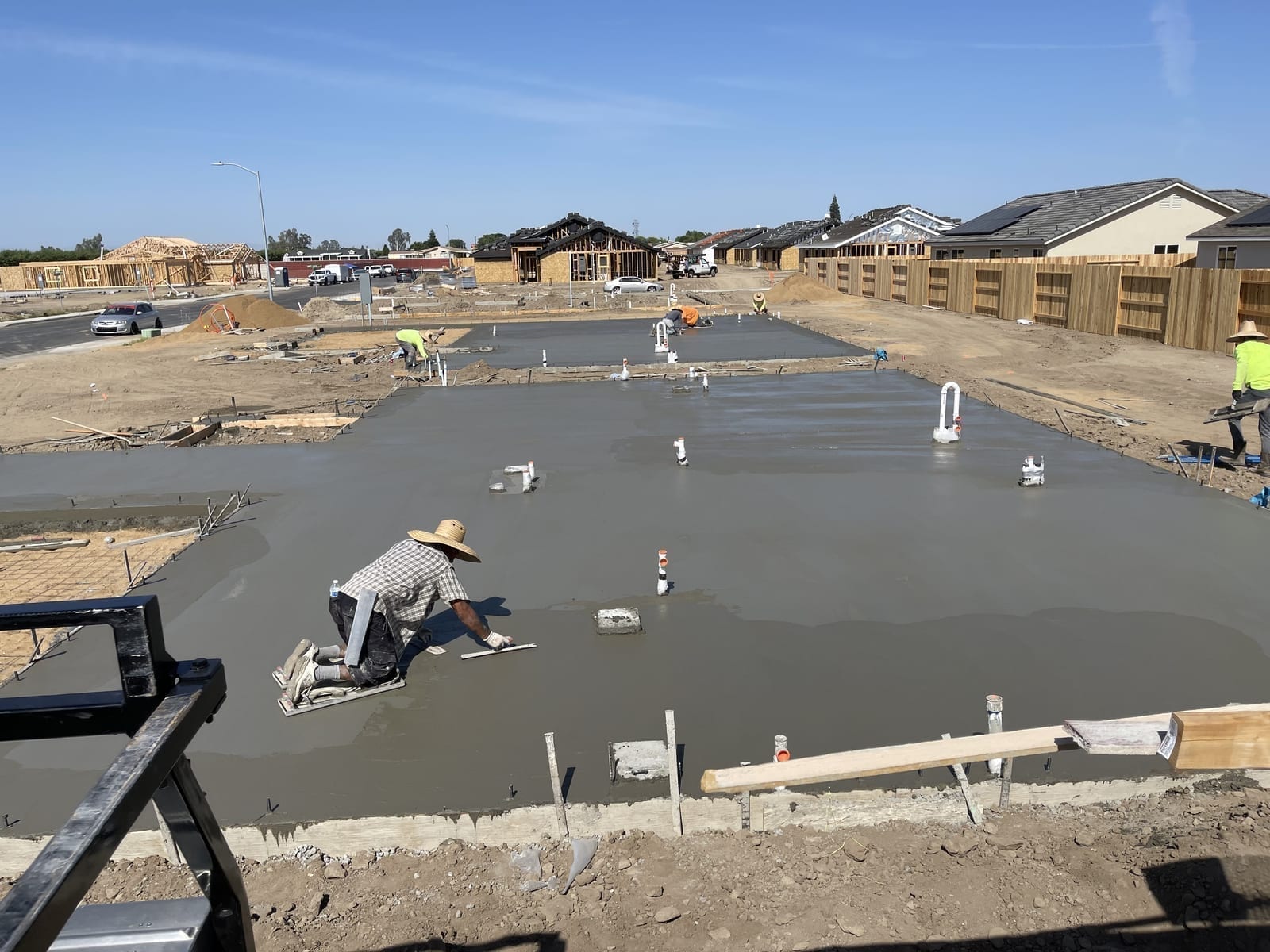 3
3Expert concrete placement, leveling, and finishing. Smooth, durable, and built to spec.
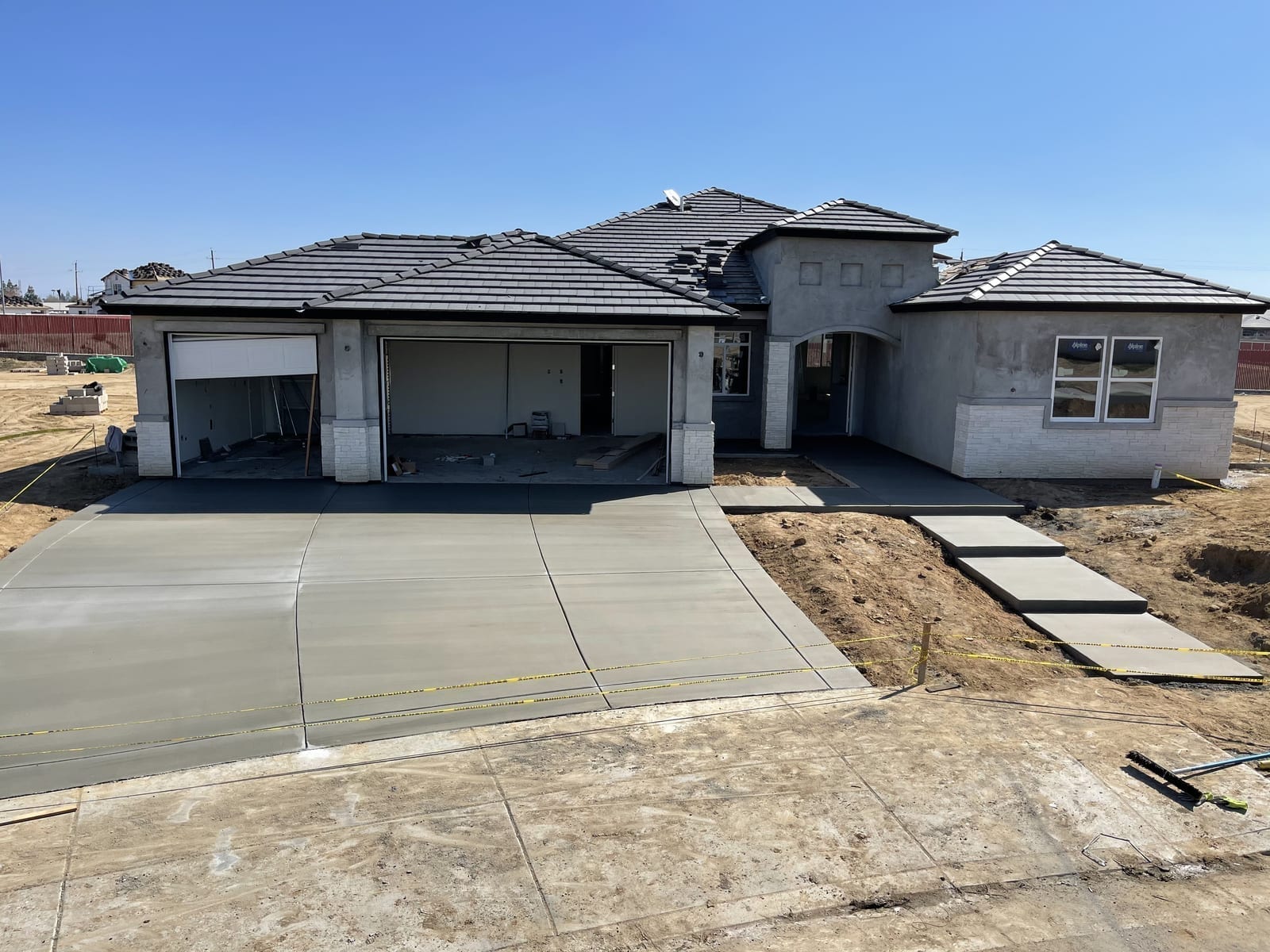 4
4Proper curing protocols and final inspection to ensure long-term strength and code compliance.
Send us a few details and photos of the area. We'll get back to you within 24 hours with a free, no-obligation quote.
© 2026 James Z. Concrete & Construction. All Rights Reserved. Privacy Policy