Commercial projects demand precision, speed, and the ability to coordinate with general contractors and tight construction schedules. James Z. Concrete & Construction has the crew and equipment to handle large-scale commercial pours.
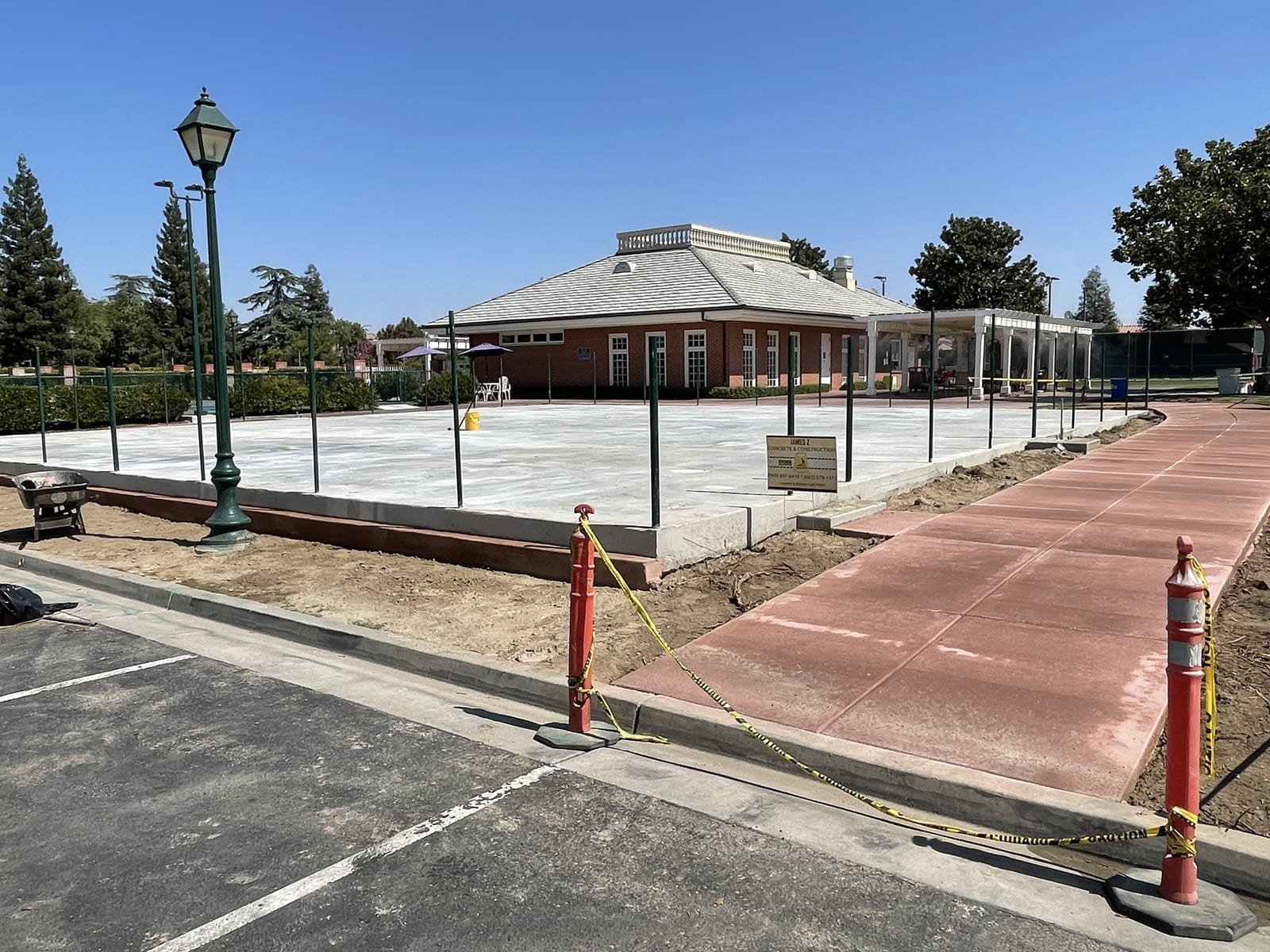
Commercial concrete is a different animal than a backyard patio. The pours are bigger, the tolerances are tighter, and the schedule is rarely yours alone. James Z. Concrete & Construction has spent over 40 years pouring slabs, panels, and docks for general contractors and developers across Kern County and the Central Valley. We read structural plans, we coordinate with the other trades on site, and we fit into the construction sequence instead of fighting it. When a GC hands us a slab date, we hit it.
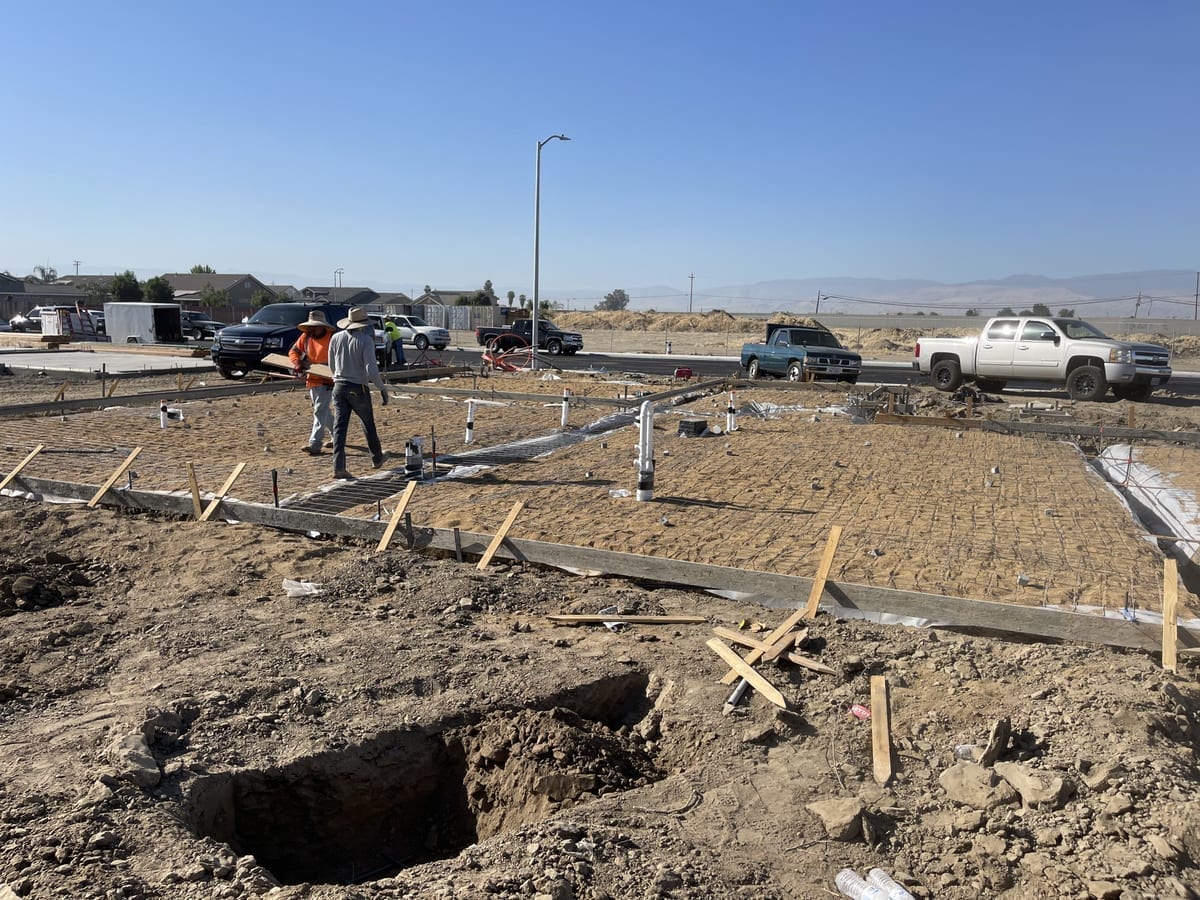
Every commercial job starts before the truck shows up. We walk the site, review the soil report, and confirm the sub-grade is right for the load the slab will carry. Central Valley ground is often expansive clay, the kind that swells when it gets wet and shrinks when it dries. On a warehouse floor or a tilt-up pad, that movement will crack a slab that wasn't built for it. So we compact the sub-base properly, set the right base rock, and add vapor barrier and moisture control where the plans call for it. Forms go in next, set to grade with a laser so the finished surface lands exactly where the engineer drew it.
Reinforcement is where a commercial slab earns its lifespan. Warehouse and industrial floors take forklift traffic, racking loads, and sometimes truck weight, so we tie rebar mats or use post-tension cable depending on the design, and we pour at the thickness the structural plans specify rather than the minimum that gets by. Mix matters too. We spec the right PSI for the job, often a higher-strength mix for heavy-traffic floors and dock aprons, and we plan the pour around the heat. Hot, dry Valley summers pull water out of concrete fast, which is how you get surface crazing and weak slabs. We pour early, use retarders and curing compounds when conditions call for it, and protect the surface so it gains strength the way it should.
Tilt-up is a big part of what we do on the commercial side. We pour the wall panels flat on a casting slab, set the embeds and lift inserts to the engineer's layout, finish the faces, and let them cure before the crane crew tilts them into place. The casting bed has to be dead flat and clean, the bond breaker has to be right, and the panel rebar and openings have to match the shop drawings exactly. Get any of that wrong and a panel doesn't lift true. We have done enough of this work to know where the problems hide.
Loading docks and ramps get their own attention. A dock takes constant abuse from trucks backing in, dock plates dropping, and pallet jacks rolling across the apron, so the concrete there needs more thickness, heavier reinforcement, and tight control of the slope so trailers seat correctly and water drains away from the building. We form the ramps to the grade the site needs, set the dock edge angle and embeds, and finish the surface for traction. The same care goes into curbs, trench drains, equipment pads, and the exterior flatwork that ties a commercial site together.
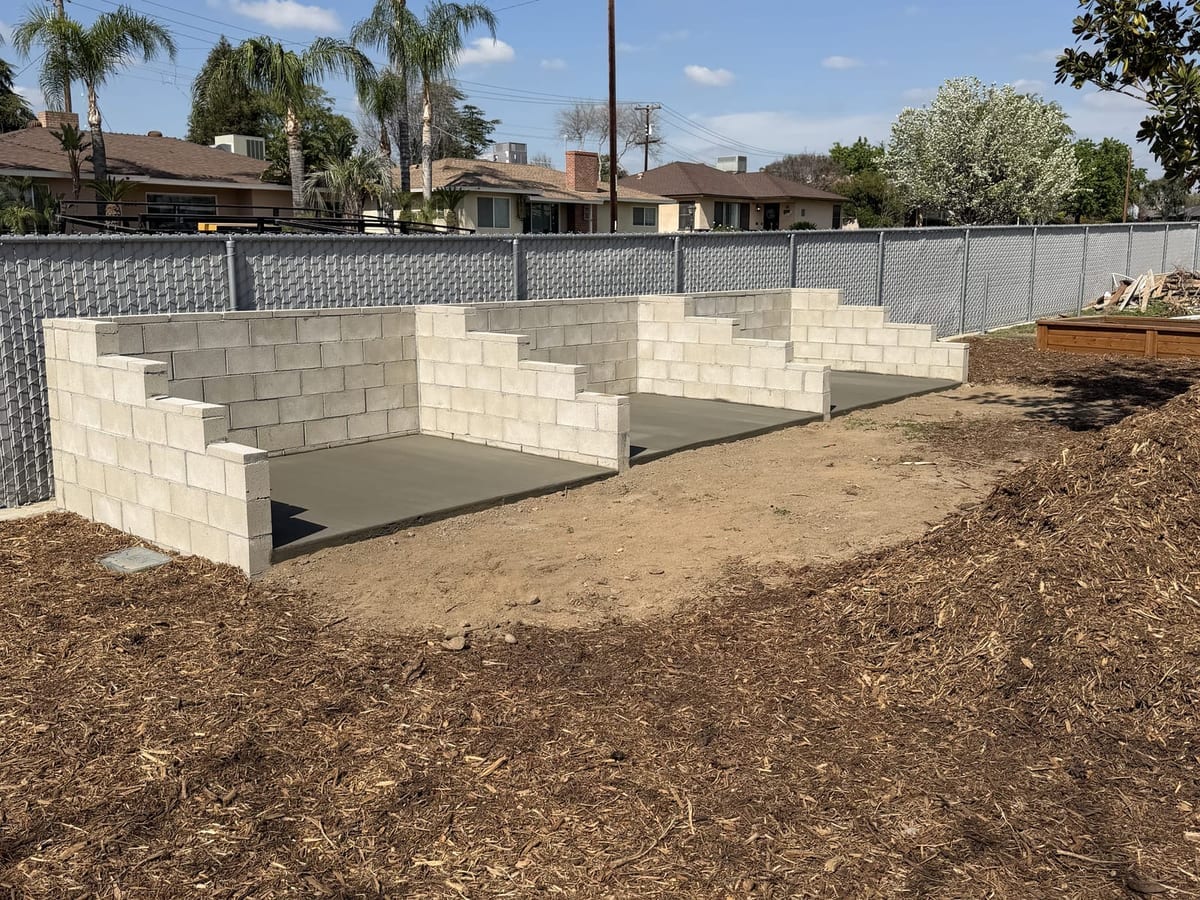
Common project types we handle include warehouse and distribution floor slabs, tilt-up panels for industrial and retail buildings, loading docks and truck ramps, equipment and generator pads, parking areas, multi-unit residential foundations and podium slabs, and the sidewalks, curbs, and ADA ramps that come with any commercial site. We bring our own pump trucks and finishing crews for large-volume pours, which keeps the work moving on a single day instead of stringing it across the calendar. On a big slab, that continuous pour matters. It gives you fewer cold joints and a more uniform floor.
What makes a commercial pour last is the boring stuff done right. Proper sub-base prep so the slab has a stable platform. Correct reinforcement and thickness so it carries the load without cracking. Control joints and construction joints placed where the engineer wants them so the concrete cracks on your terms instead of randomly. Curing that respects the Valley climate so the surface reaches full strength. And a crew that shows up on time, pours to spec, and cleans up the site when the work is done. We carry full commercial liability insurance and a surety bond, and our CSLB license (#778284) is active and covers commercial concrete work. If you are a general contractor or developer looking for a concrete sub you can hand a schedule to, give us a call and we will come look at the plans.
 Warehouse & Industrial SlabsTilt-Up Wall PanelsLoading Docks & RampsMulti-Unit Development Foundations
We carry full commercial liability insurance and bonding. Our California contractor's license (#778284) covers all concrete work for commercial and residential projects.
If you're a general contractor or developer looking for a reliable concrete sub, reach out. We show up on time, pour to spec, and clean up after ourselves.
Commercial concrete is priced per project, not off a simple per-foot table, because the slab thickness, reinforcement, mix strength, site prep, and finish all shift the number. As rough context, standard structural concrete in the Central Valley runs around $8 to $15 per square foot installed, and heavy-duty floors, dock aprons, and tilt-up work cost more because of the added thickness and steel. We give general contractors and developers a free, detailed quote off your plans within 24 hours so you get a real number for your specific job.
It depends on the scope and how it fits the larger construction schedule, but the pour itself is usually the fastest part. We bring our own pump trucks and finishing crews so a large slab can go in continuously in a single day rather than over several. The bigger timeline driver is sub-base prep, forming, and reinforcement beforehand, plus cure time after. Concrete is walkable in a day or two and gains usable strength over about a week, reaching full strength at 28 days, which we plan around so we never hold up the GC's next trade.
We handle the work from the ground up: sub-base evaluation and prep, forming set to grade with a laser, rebar or post-tension reinforcement to the structural plans, the right mix and thickness, the pour itself with our own pump trucks, finishing, control and construction joints, and proper curing for Valley conditions. Tilt-up jobs include casting-bed prep, panel forming, embeds and lift inserts, and finishing the faces. Permits, engineering, and soil reports are typically the GC's or owner's responsibility, but we coordinate around them and pour to whatever the engineer specs.
No slab is guaranteed crack-free, but a properly built commercial slab controls where and how concrete moves so cracking does not become a structural problem. Central Valley ground is often expansive clay, so we compact the sub-base, set the right base rock, and add moisture control before we pour. Hot, dry summers pull water out of fresh concrete, so we pour early in the day and use retarders and curing compounds to protect the surface. Correct reinforcement, thickness, and joint placement do the rest. That combination is what keeps a floor flat and sound for decades.
 1
1We assess soil conditions, grading, and project requirements before any concrete is mixed.
 2
2Precise form-setting, rebar placement, and sub-grade preparation for a rock-solid result.
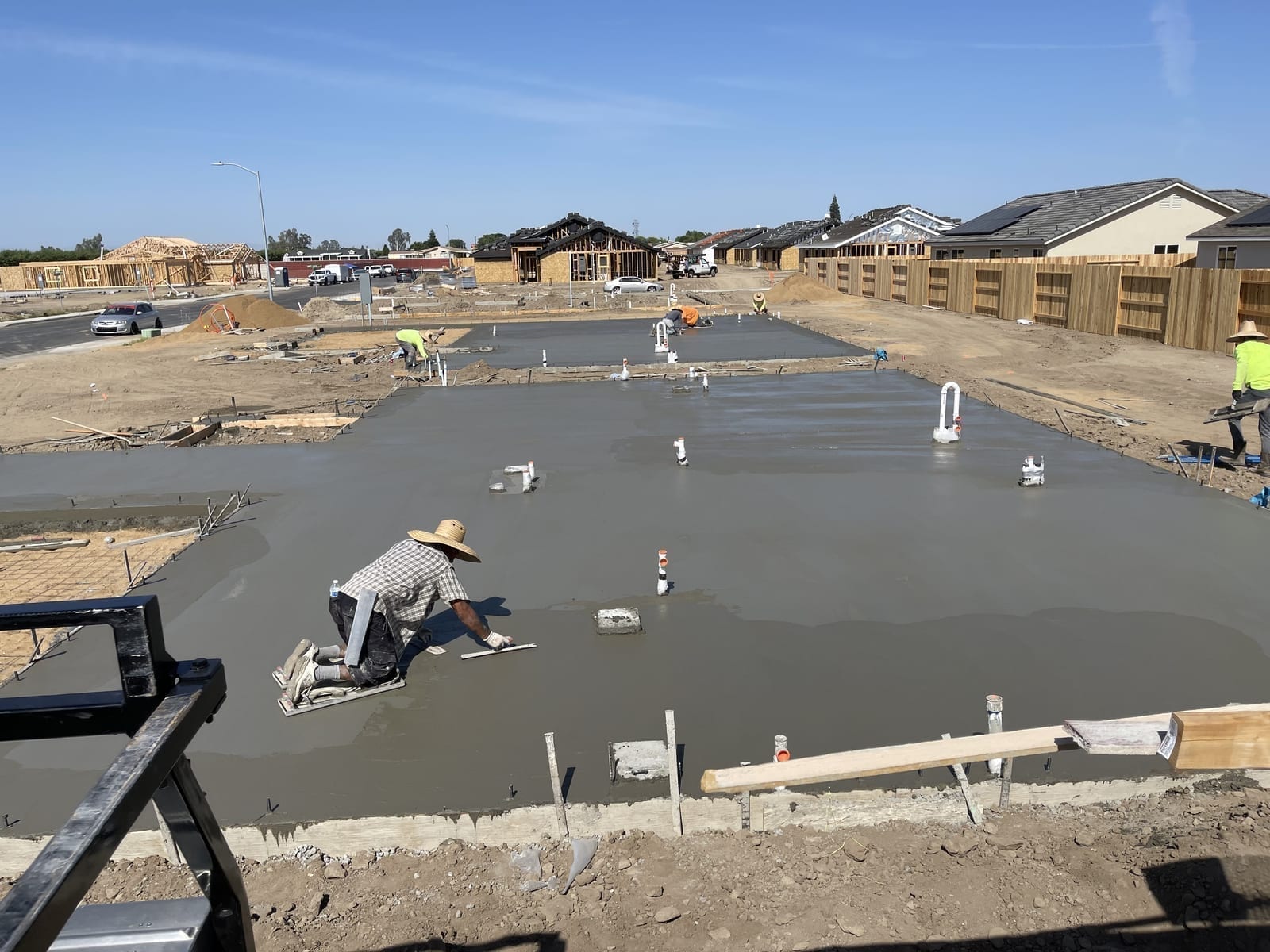 3
3Expert concrete placement, leveling, and finishing. Smooth, durable, and built to spec.
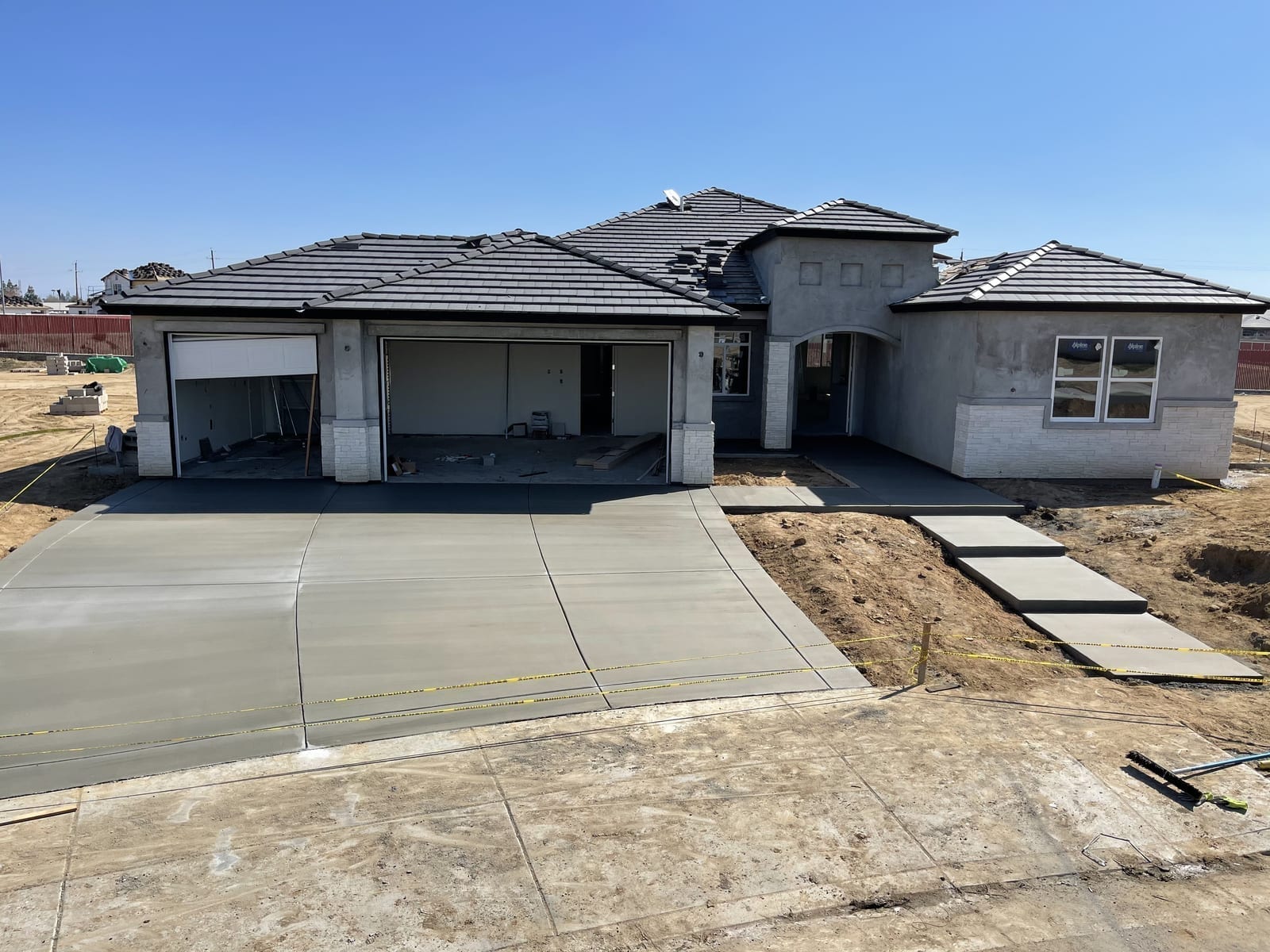 4
4Proper curing protocols and final inspection to ensure long-term strength and code compliance.
Send us a few details and photos of the area. We'll get back to you within 24 hours with a free, no-obligation quote.
© 2026 James Z. Concrete & Construction. All Rights Reserved. Privacy Policy