Flatwork is one of the most common, and most demanding, types of concrete work. James Z. Concrete & Construction delivers precision-poured flat surfaces that stay level, crack-free, and durable for decades.
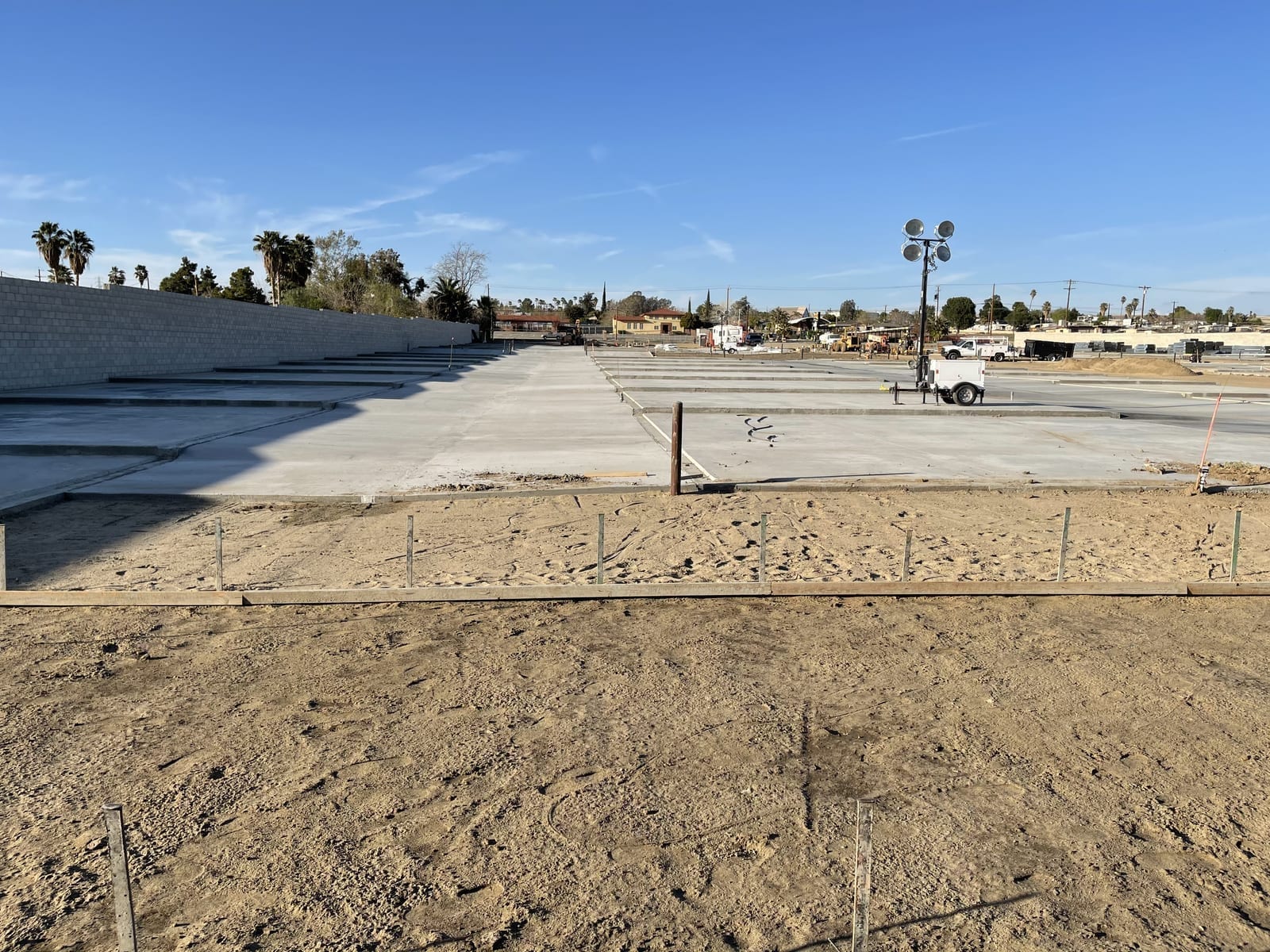
Flatwork is any concrete poured in a horizontal plane: garage floors, warehouse slabs, interior building floors, patios, and pads. It looks simple from the outside. It is not. A flat slab carries load across its whole surface, shows every imperfection in the light, and has nowhere to hide a mistake. The difference between a floor that stays tight and level for thirty years and one that cracks and spalls inside a season comes down to what happens under the slab and how the pour is finished. We have been doing this kind of work in Kern County for over 40 years, and the process below is how we build flatwork that lasts.
Every job starts with the sub-base. We strip the organic material and soft spots, then bring the grade up with compacted aggregate base. Central Valley soil is often expansive clay that swells when it gets wet and shrinks when it dries. That movement is what lifts and cracks a slab that was poured straight on native dirt. We compact the base in lifts and check it, so the slab sits on a stable, uniform platform instead of soil that moves with the seasons. Where moisture is a concern, especially on interior floors and garage slabs that will get flooring or coatings on top, we install a vapor barrier under the slab to keep ground moisture from migrating up through the concrete.
Reinforcement is next. Most residential garage and interior slabs get a grid of rebar or welded wire, tied and chaired up off the base so the steel sits in the middle of the slab where it does its job. Heavier warehouse and commercial floors that take forklift and rack loads get a heavier rebar mat or a fiber-reinforced, thicker section sized to the load. We set the forms to the right depth and screed line, check them for level, and confirm the thickness before any concrete shows up. A four inch interior floor and a six inch shop floor are two different builds, and we pour each one to the spec the use calls for.
When the trucks arrive, we place the concrete, screed it to grade, and float it. Valley summers are hot and dry, and heat is the enemy of a good finish. Concrete that sets too fast loses workability before the finish is right and skins over on top while it is still soft underneath. We schedule pours for the cooler part of the day in peak summer, keep the crew sized to move the mud fast, and use retarders or evaporation control when the conditions call for it. Timing the finish is the part you cannot teach from a book. We wait for the bleed water to leave, then float and trowel at the right window.
The finish is yours to choose. A broom finish gives a slip-resistant surface for exterior pads and ramps. A smooth steel trowel finish is the standard for garage and warehouse floors where you want a hard, dense surface that takes a coating or epoxy later. We also pour exposed aggregate, stamped, and stained or colored finishes for patios and decorative interior floors. Whatever the finish, the goal underneath is the same: a dense, well-cured surface that resists wear and dusting.
Control joints are not optional and they are not cosmetic. Concrete shrinks as it cures, and it will crack. A control joint gives the slab a planned, straight line to crack along instead of a random crack across your floor. We saw-cut or tool the joints at the right spacing for the slab thickness, usually in a pattern that keeps each panel close to square, and we cut them early before shrinkage cracking starts. On larger commercial floors we lay out the joint pattern with the column lines and door openings so the joints land where they make sense.
Curing is the last step and the one most often skimped. Fresh concrete needs to hold moisture while it gains strength. In the dry Valley air, a slab left to cure on its own loses water too fast, ends up weaker on the surface, and is more likely to dust and craze. We cure our slabs properly with a curing compound or wet cure so the concrete reaches the strength it was designed for. That is what gives you a floor that holds up to traffic, loads, and time.
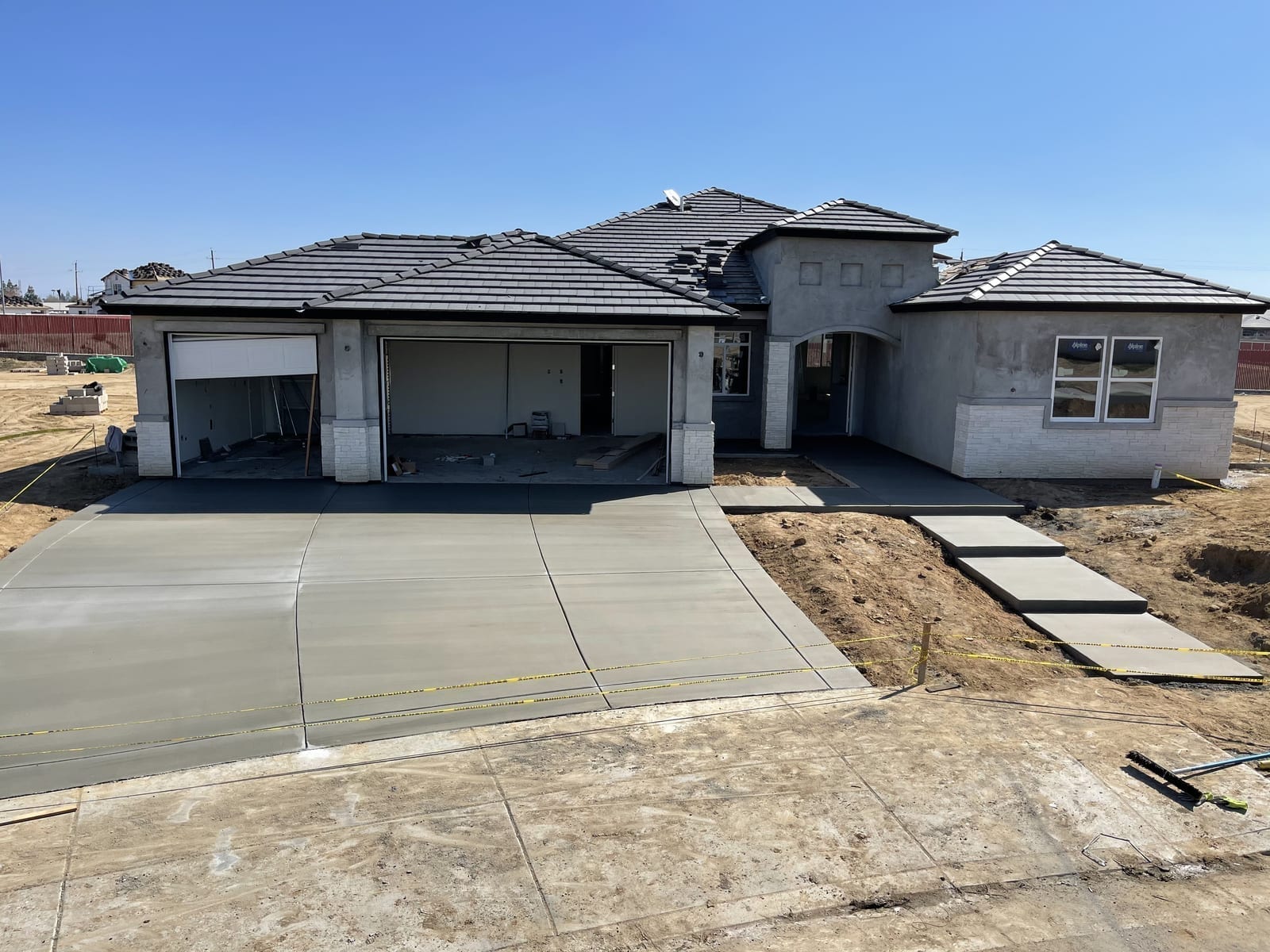
Common flatwork projects we handle include attached and detached garage floors, shop and warehouse slabs, interior building floors for new construction and remodels, equipment and RV pads, patios, and pool decks. Some are a single afternoon pour. Some run several days across a large commercial floor. Either way the same fundamentals apply: a compacted base, the right reinforcement, the right thickness, a finish matched to the use, joints cut on time, and a proper cure. Do those right and the slab does its job quietly for decades. Skip any one of them and you see it within a year. We do not skip steps, and we will tell you straight what your slab needs before we pour a yard of it.
 Garage & Warehouse FloorsInterior Concrete SlabsPatio & Pool Deck FlatworkLaser-Guided Precision Pours
Proper control joints, curing methods, and reinforcement make the difference between flatwork that performs and flatwork that fails. We take no shortcuts. Every slab gets the same attention to detail regardless of size.
If you need flat concrete done right the first time, give us a call. We've poured thousands of square feet across the Central Valley and our work speaks for itself.
For standard flatwork in the Central Valley, figure roughly $8 to $15 per square foot installed for a broom or smooth-trowel finish. Decorative work like stamped or stained runs higher, around $14 to $25 per square foot. Thickness, reinforcement, sub-base prep, and how much demo or grading the site needs all move the number, so the best way to get a real figure is a free on-site quote. We get those back to you within 24 hours.
Most residential garage slabs are a single pour once the base and forms are set, with a day or two of prep beforehand. A larger warehouse or commercial floor can run several days depending on square footage and whether we are pouring in sections. The concrete is firm enough to walk on in about a day, but plan on roughly a week before light use and around 28 days for the slab to reach full design strength before heavy loads.
Everything that makes the slab last. That means site prep and grading, a compacted aggregate sub-base, a vapor barrier where it is needed, rebar or wire reinforcement, forming, the pour and finish you choose, control joints cut on time, and proper curing. We confirm thickness and spec before any concrete shows up, and we clean up the site when we are done. You get a complete, ready-to-use floor, not a slab that needs someone else to finish the job.
Concrete shrinks as it cures, so every slab will crack somewhere. The goal is to control where. That is what control joints are for, a planned line for the slab to crack along instead of a random crack across your floor. With a compacted base, correct reinforcement, joints cut at the right spacing and on time, and a proper cure, the slab stays tight and the cracks stay in the joints where you do not notice them. Most cracking we get called out to fix comes from slabs poured on bad base with no joint plan, and that is exactly what our process is built to avoid.
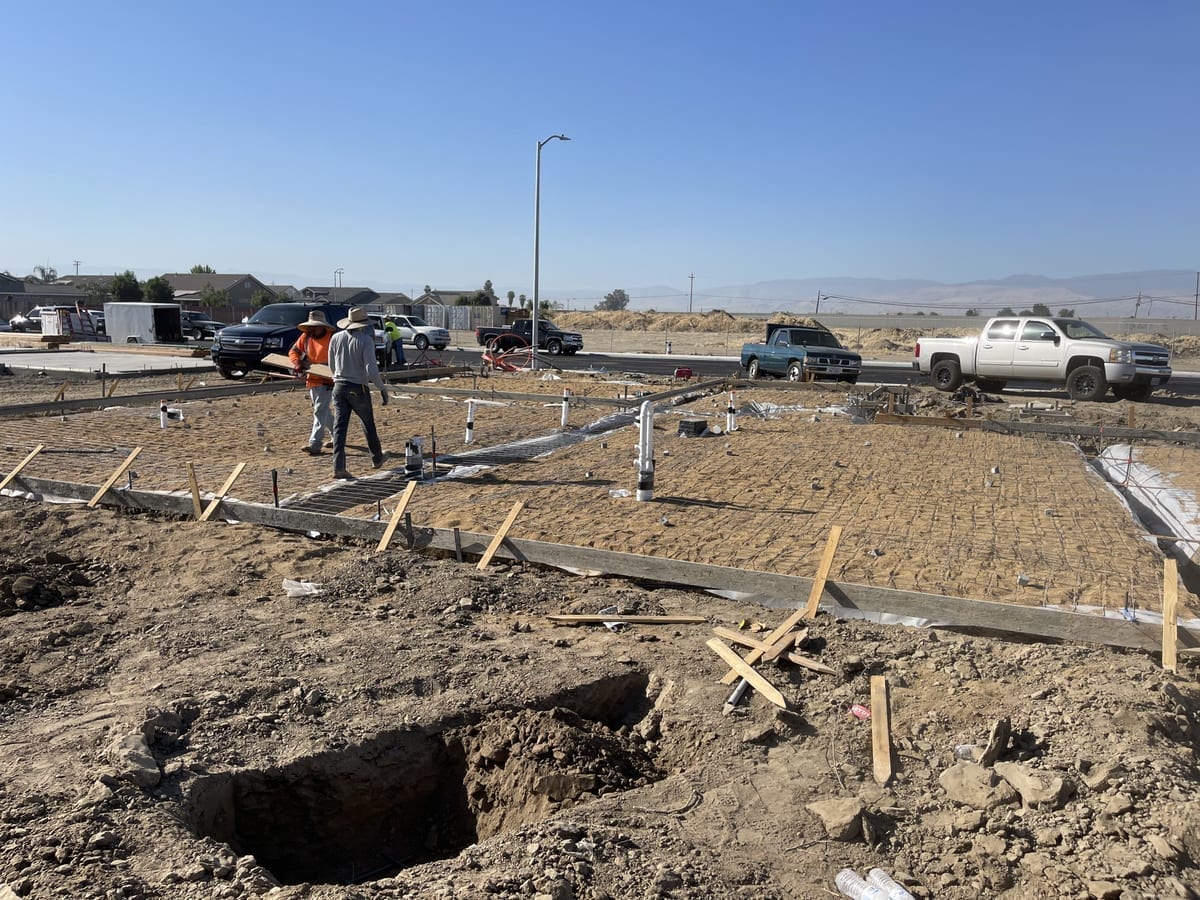 1
1We assess soil conditions, grading, and project requirements before any concrete is mixed.
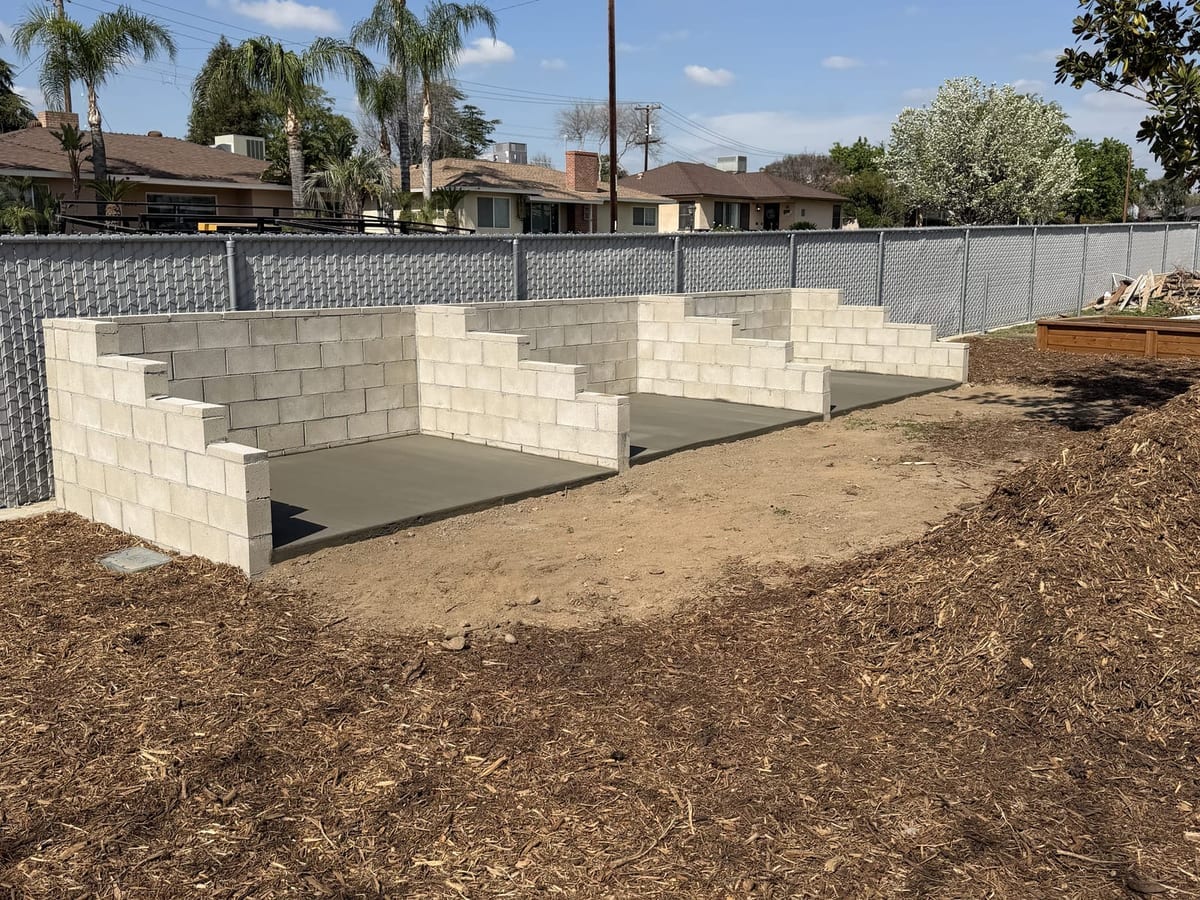 2
2Precise form-setting, rebar placement, and sub-grade preparation for a rock-solid result.
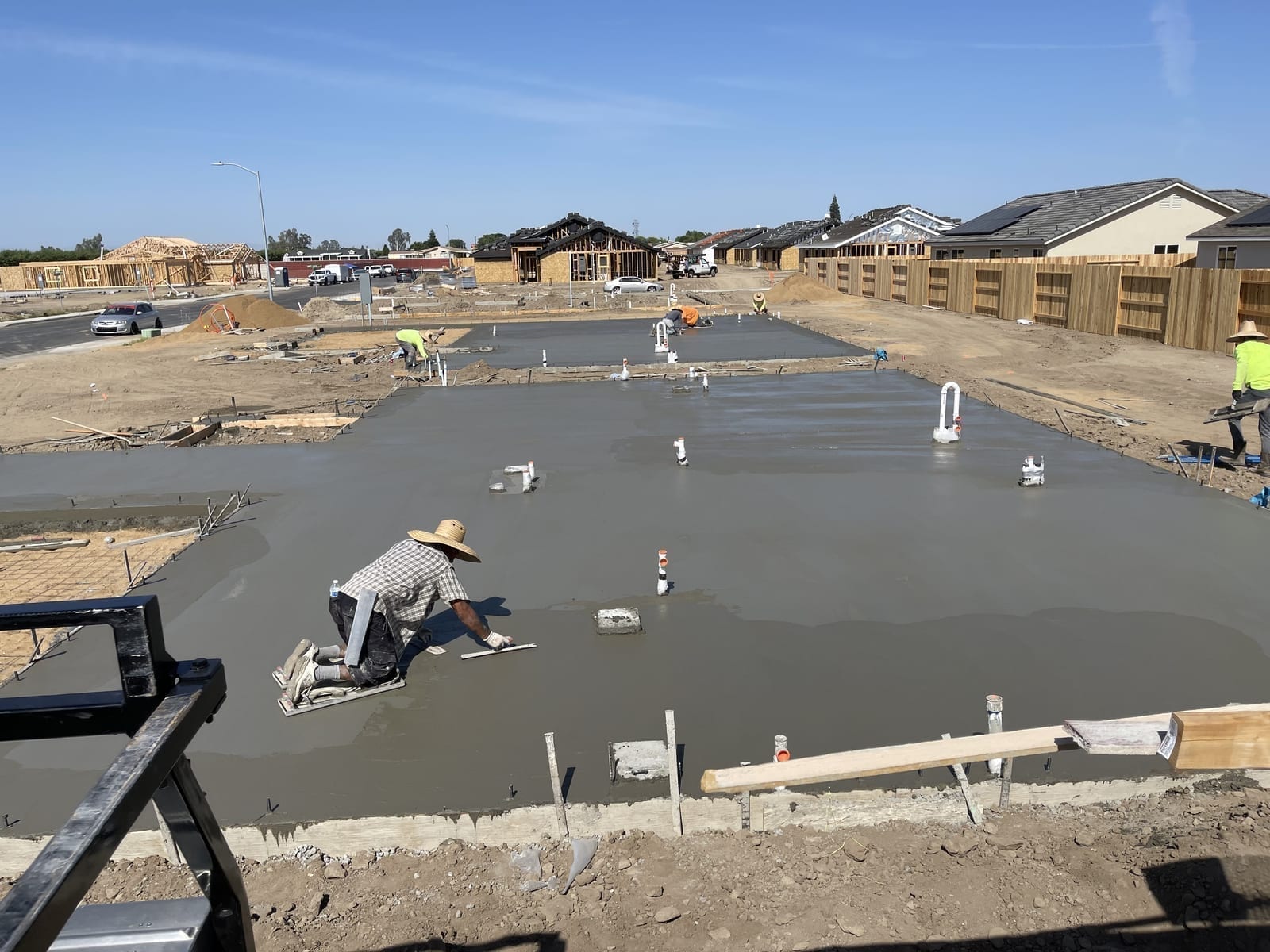 3
3Expert concrete placement, leveling, and finishing. Smooth, durable, and built to spec.
 4
4Proper curing protocols and final inspection to ensure long-term strength and code compliance.
Send us a few details and photos of the area. We'll get back to you within 24 hours with a free, no-obligation quote.
© 2026 James Z. Concrete & Construction. All Rights Reserved. Privacy Policy