
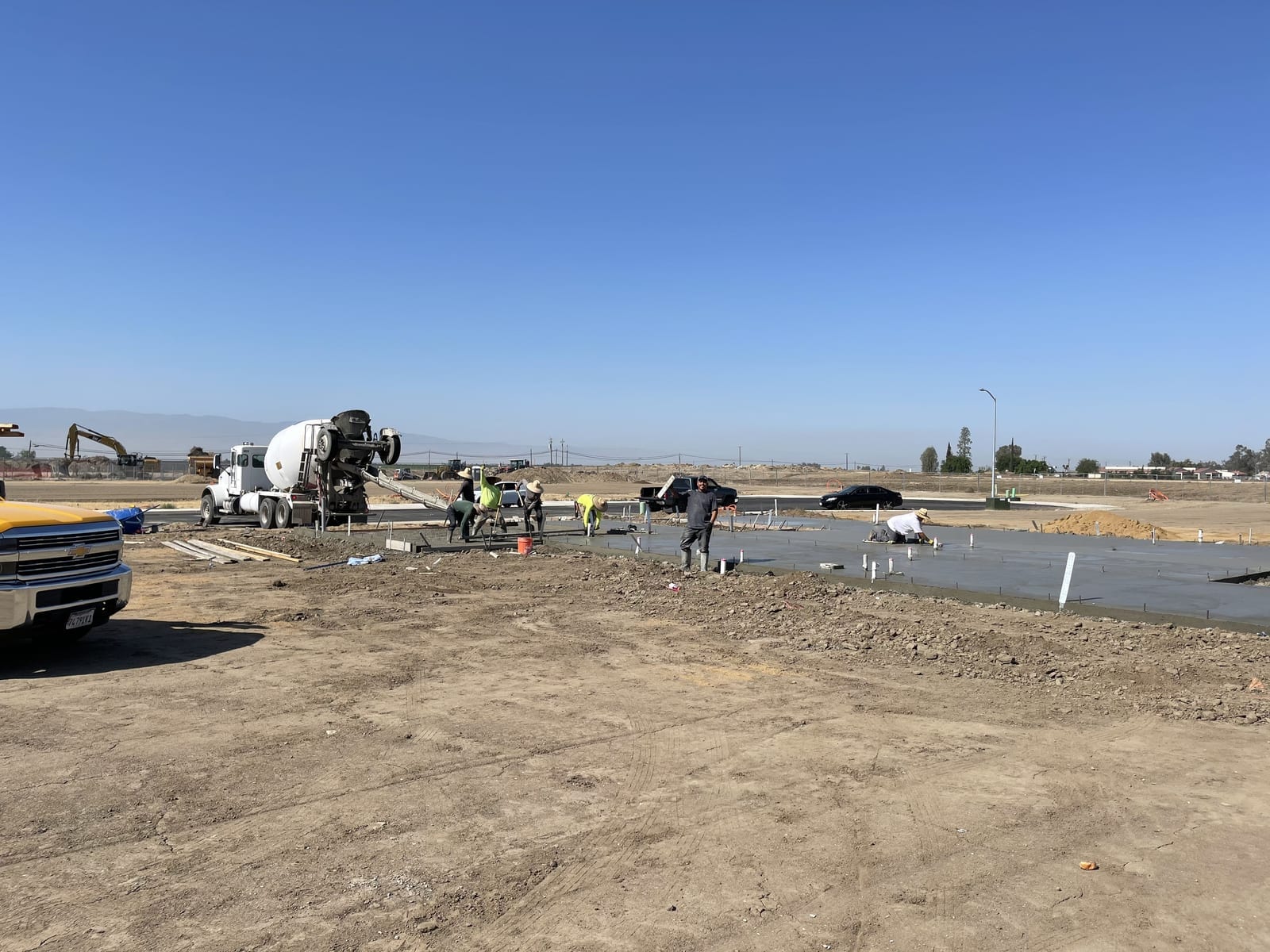
Curing Is Not the Same as Drying
People say concrete needs to "dry," but that is not really what happens. Concrete hardens through a chemical reaction between cement and water called hydration. The water does not evaporate out so much as get used up, locking the mix into a solid. That reaction needs time and it needs moisture to keep going.
This matters because it changes how you treat fresh concrete. If the surface dries out too fast, hydration stalls and you end up with weaker, dustier, more crack-prone concrete. So the goal in the first days is the opposite of what most people expect. You want to keep the slab damp, not let it bake dry. In a hot, dry place like the Central Valley, that is the whole ballgame.
The Realistic Timeline: 24 Hours to 28 Days
Concrete gains strength on a curve. It is strong fast at first, then keeps building slowly for weeks. Here is the timeline most residential slabs follow under normal conditions.
First 24 to 48 hours: the concrete sets and becomes firm. You can usually walk on a patio or walkway carefully after about 24 hours, though we often ask you to wait closer to 48 to be safe. The surface is still soft enough to scuff or mark.
7 days: the concrete has reached roughly 70 percent of its design strength. This is the point where light foot traffic and normal use are fine for most flatwork. It is also why curing care in week one matters more than any other stretch.
28 days: this is the standard benchmark for full cured strength. Engineers spec concrete strength at 28 days because that is when it has effectively reached its rated capacity. After that it keeps hardening slowly for months, but the meaningful waiting is done.
When Can You Drive on a New Driveway?
This is the question we get most. The short answer is wait 7 days for cars and 28 days for heavy vehicles like RVs, trucks, dumpsters, or anything loaded.
A standard residential driveway is poured 6 inches thick with rebar for a reason. That thickness and reinforcement are what let it carry vehicle weight without cracking. But the concrete still needs to reach most of its strength before you load it. Drive on a slab at day three and you risk surface cracking or worse, even if it looks hard.
So the realistic rule: stay off it with cars for a full week. If you have a motorhome, a work truck, or you are getting a heavy delivery, give it the full 28 days. It is a short wait against a driveway meant to last decades.
How Central Valley Heat Changes the Schedule
Curing times assume reasonable conditions, and a Bakersfield or Shafter summer is anything but. When it is over 90 degrees and bone dry, water leaves the surface fast. That speeds up the set but works against a strong cure, because the slab can crust over on top while it is still soft underneath.
To fight this, the timing of the pour matters. In peak summer we often pour early in the morning to avoid the worst heat, and we keep the surface wet during finishing. After the pour we cure the slab actively by misting it, covering it with curing blankets or plastic, or applying a curing compound that seals moisture in. None of that is optional in July. It is the difference between concrete that lasts and concrete that crazes and cracks in its first week.
Cold matters too, though it is less of an issue here. Below about 50 degrees, hydration slows down and the whole timeline stretches out. On the rare cold Valley morning, concrete simply takes longer to reach the same milestones.
What You Should and Should Not Do While It Cures
If your contractor leaves the slab covered or asks you to wet it down, follow that. Keeping fresh concrete damp for the first several days is one of the cheapest ways to get stronger, longer-lasting concrete. A light misting a few times a day in hot weather goes a long way.
Keep weight off it on schedule. No cars on a driveway for a week. No furniture dragged across a fresh patio. Keep pets and kids off it for the first day or two so you do not end up with permanent paw prints and handprints, charming as those can be.
Do not panic over small surface cracks or a chalky film early on. Fine hairline cracks are common and usually cosmetic, especially as concrete shrinks slightly while curing. That is exactly why we cut control joints into slabs, to give cracking a planned place to go. If something looks wrong, the right move is to ask, not to assume the worst.
A Few Honest Notes on Sealing and Soil
If you are adding a sealer or a decorative stain, the slab usually needs to cure first. Most sealers go on after the concrete has had time to release moisture, often around 28 days, so the sealer bonds instead of trapping water. Stamped and colored finishes have their own timing, which we walk through on those jobs.
Sub-base prep also affects how well concrete holds up long after curing. Central Valley soils are often expansive clay that swells and shrinks with moisture. Concrete poured on a poorly prepped, moving base will crack no matter how perfectly it cured. Proper grading, a compacted sub-base, and the right thickness do more for the lifespan of your slab than anything you do in week one.
Planning a Project? Get a Real Number First
Knowing the timeline helps you plan around a pour, whether that is parking on the street for a week or scheduling around a summer heat wave. We will always give you the realistic curing schedule for your specific project before we start, so there are no surprises.
James Z. Concrete & Construction has been pouring concrete across Shafter, Bakersfield, and the Central Valley for over 40 years. If you are thinking about a driveway, patio, or slab, try our concrete cost calculator for a rough ballpark, then call (661) 501-8680 for a free, no-obligation quote within 24 hours. No pressure, just straight answers.
Ready for an exact price on your project? Get a free, no-obligation quote within 24 hours, or run the numbers yourself with our cost calculator.